Two chapters, one problem
Closeness.ai began after three years as a CEO-in-Residence trying to acquire a business. I had spent years building technology products, then stepped outside product management entirely and spent three years looking at companies through the lens of a potential owner.
Those turned out not to be separate experiences. The second one put me inside a problem that new AI capabilities could solve in a fundamentally different way.
Living the problem
During the search I sourced more than 20,000 businesses and evaluated hundreds of acquisition opportunities. A searcher can spend years trying to acquire one company, and a whopping 50% never do before the search fund runs out. A huge amount of that time goes into work that is necessary but highly repetitive: identifying attractive niches, researching industries and companies, figuring out who to contact, finding something meaningful to say to them, preparing outreach campaigns, and evaluating opportunities when they respond.
At one point I was personally spending more than 20 hours a week researching companies and writing personalized hooks for outreach.
So when agentic AI became capable of not just generating text but researching, reasoning across information, and executing multi-step workflows, I started asking a different question.
Not how do we make the search process 20% more efficient, but how would an entrepreneur discover and evaluate an acquisition if you redesigned it from scratch?
The smallest painful workflow
I didn’t start by building the full vision. I went back to the people experiencing the problem: 200+ conversations, and a small group of design partners, looking for where the pain was severe enough that someone would actually change their workflow.
The clearest one was something I knew personally. Generic outreach doesn’t work in M&A, because you’re asking an owner to consider selling something they spent decades building. You have to show you understand their business. Doing that manually across thousands of companies is prohibitively expensive.
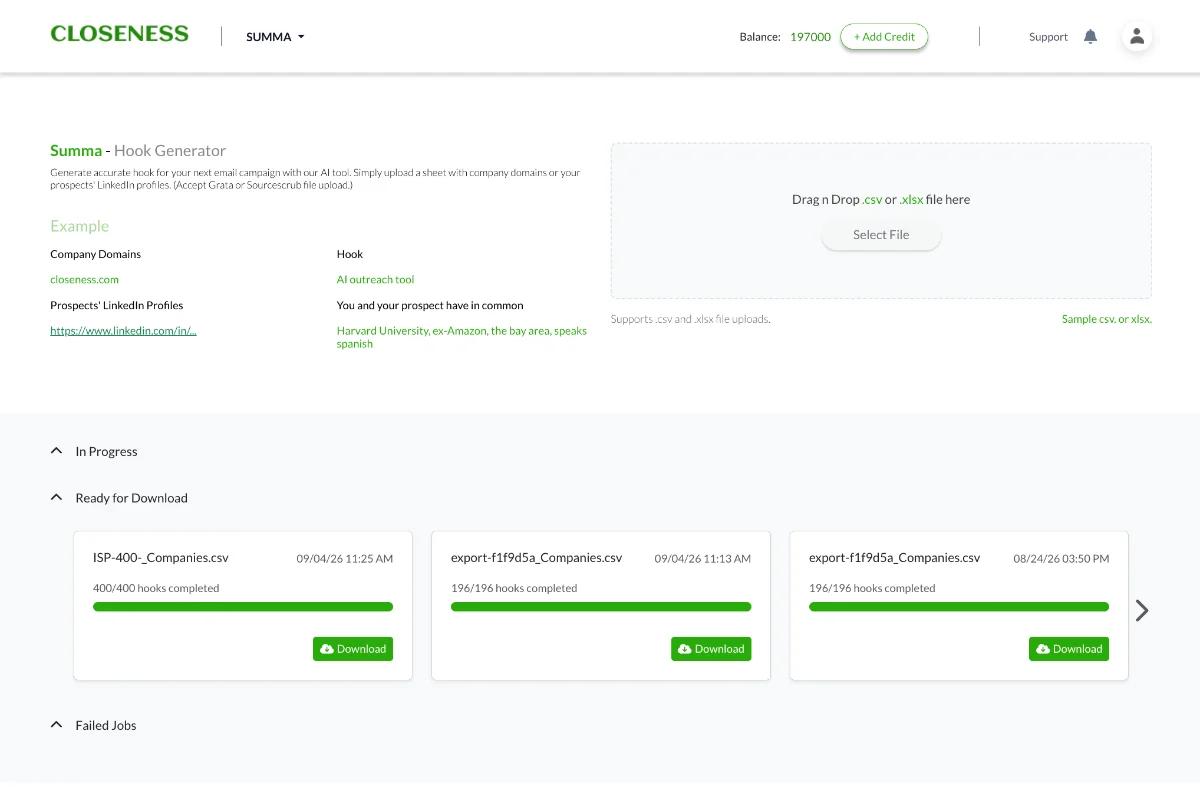
So the first thing I built was narrow: an AI product that researches a prospect, understands relevant context, and generates a personalized networking hook. I shipped it as a Chrome extension that fit into workflows people already used, rather than asking anyone to adopt a new platform.
That put something real in front of customers fast, which moved the question from “do you like this idea” to “will you use it, and will you pay for it.” For searchers running campaigns, it took 10 to 20 hours of manual preparation out of the week.
V1 landed flat
The first version generated two kinds of hook: a company hook and a location hook. That was it. Customers were unimpressed, and several said a version of the same thing: you spent all this time and this is what it does?
It was a fair reaction. We had underestimated what it takes to build scalable software from scratch with no corporate support behind it, and we had underestimated the engineering underneath an agentic product: processing any number of files a customer uploads concurrently, with no hard limit, and producing consistent results every time.
Two things came out of that. We kept investing in the hard part, adding many more hook types and refining the agentic experience so it could guide someone with no sales or M&A outreach background through outreach they had never done. And we stopped assuming the hardest product had to come first.
You spent all this time and this is what it does?
Shipping what customers would pay for now
We launched two products that are engineering-light but fast to produce and that customers clearly wanted. The CIM analyzer is the clearest example: customers were ready to pay immediately.
That changed the sequencing. The deep agentic workflow is still the thesis, but it no longer had to carry the business on its own while we built it.
Expanding only on evidence
Outreach turned out not to be an isolated problem. The same capabilities applied upstream to niche and industry research and downstream to evaluating opportunities.
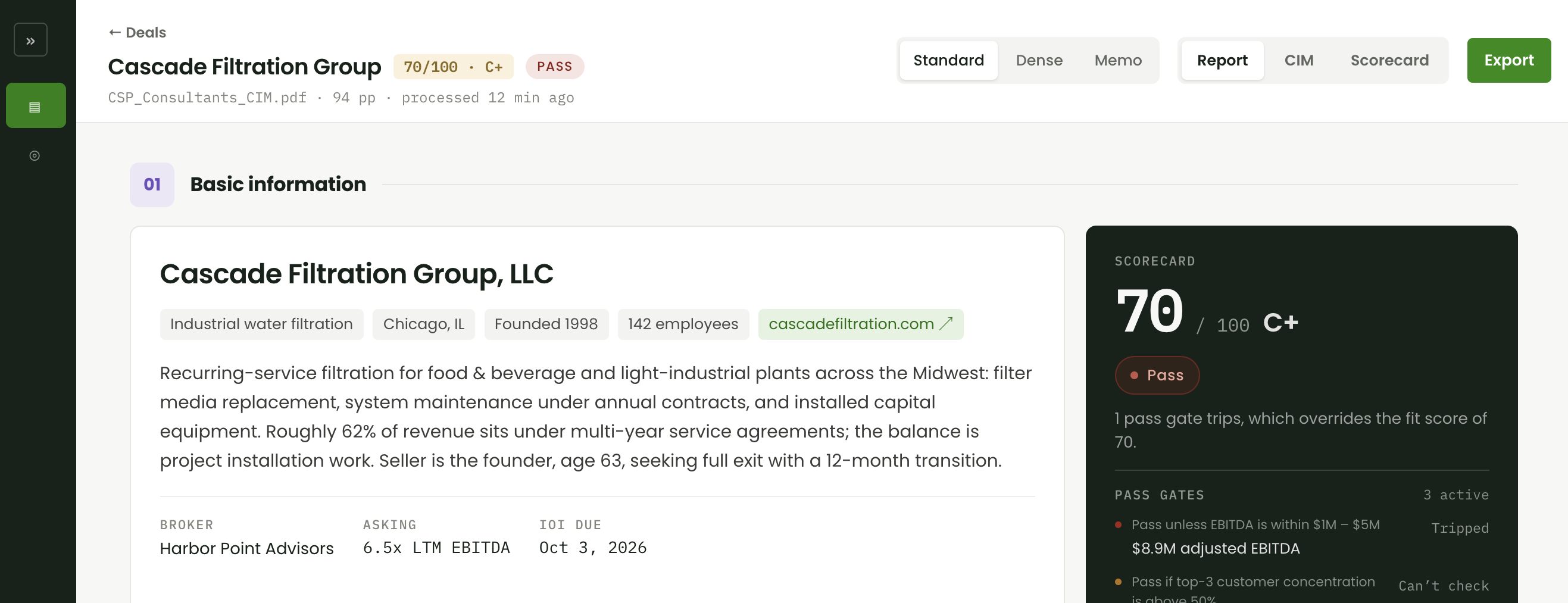
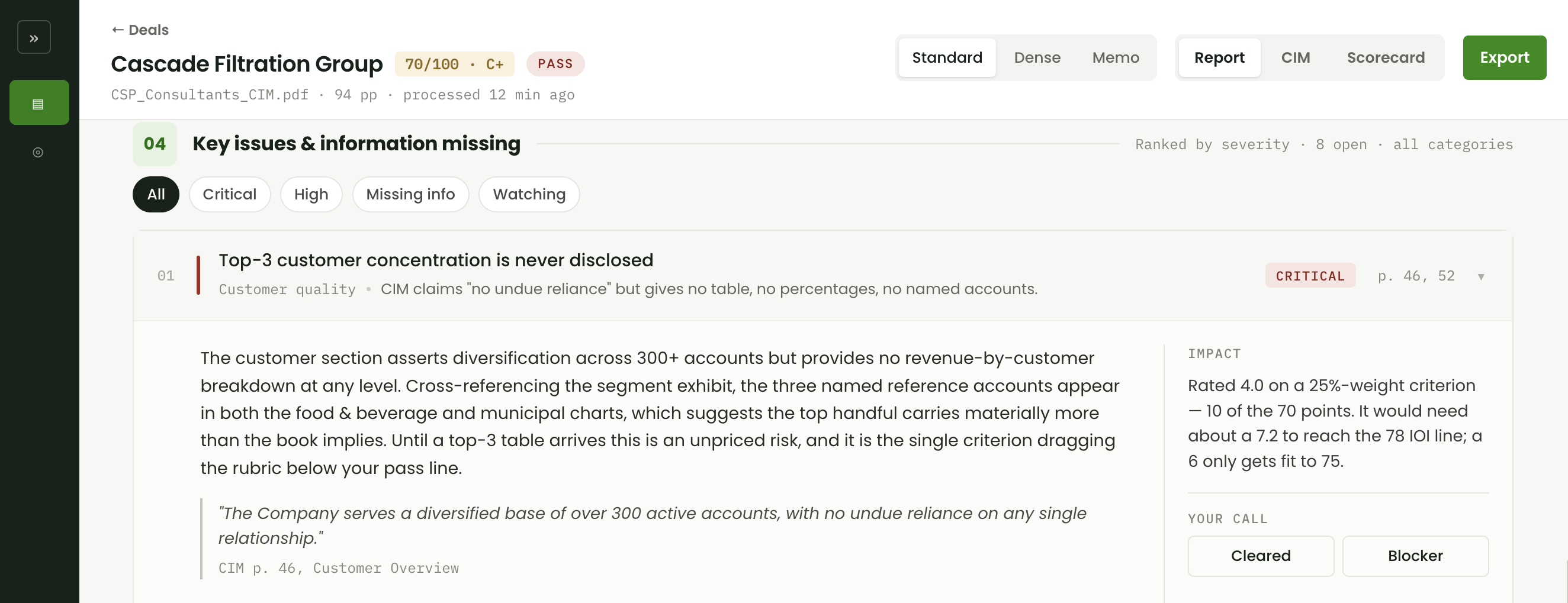
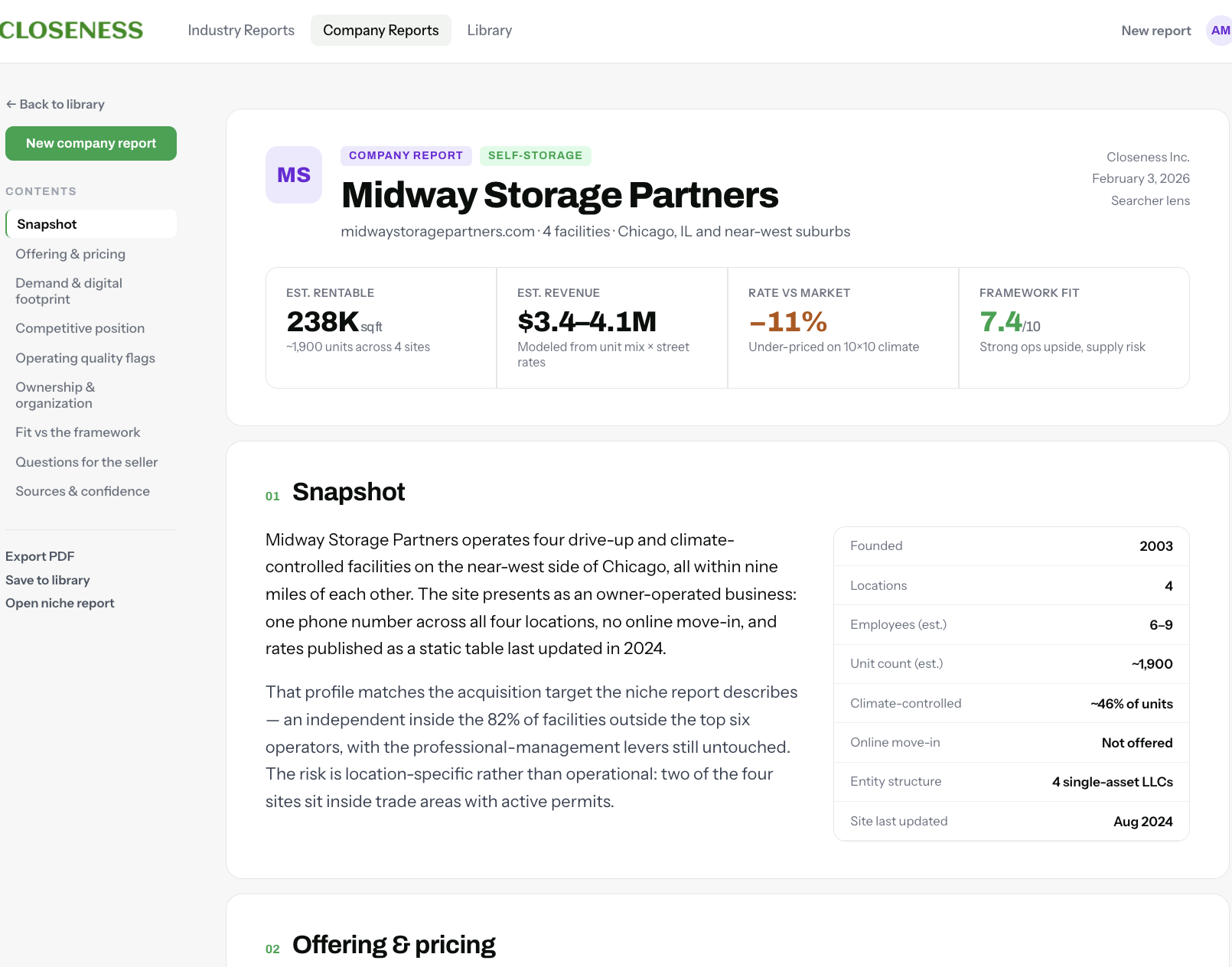
We expanded from a point solution into three products on one workflow. The Hook Generator personalizes outreach at campaign scale. The CIM Analyzer screens a deal against a searcher’s own acquisition criteria in minutes and cuts broker deal review time by half. The Report Builder turns scattered market and company data into investor and lender grade reports. That brought us design partners and paying businesses rather than people telling us the concept sounded interesting.
What building it required
Building hands-on with today’s AI stack raised questions that don’t come up in traditional software. When should an agent reason versus follow a deterministic workflow? What context does it need? When should we retrieve? How do you orchestrate multiple steps and tools? What happens when an agent fails halfway through? And how do you evaluate output quality when there isn’t one objectively correct answer?
We worked through browser agents that research prospects and execute parts of the outreach workflow, multi-agent workflows, RAG, tool use, context management, and evaluation.
What it changed about how I build
Earlier in my career I built 0→1 products inside large organizations, where you could do substantial research, build a business case, align stakeholders, write a roadmap, and then mobilize engineering around it. As a founder the feedback loop is harsher and faster.
Nobody cares about your roadmap. They care whether the problem hurts enough to change their behavior, and eventually whether it hurts enough to pay you. That made me far more disciplined about finding the smallest expression of a thesis that can generate real evidence.
The CEO-in-Residence years added a second filter. Not just can we build this and do users want it, but is this a valuable market, how often does the problem occur, what are the economics of solving it, what creates defensibility, and can it become a durable business rather than an interesting product.
I used to think like a product leader: customer problem, technology, product. Now I think across four dimensions at once — customer, technology, product, and business economics.
Where it stands
In a client interview last week, someone told me they could not believe how much the business had evolved in a month. They wanted all three products. They wanted to pay immediately, and they said they thought we could charge anywhere between $500 and $5,000.
For a long time what we heard was the opposite. It is not enough. I already do this manually. I built some version of this myself. Those are the responses that tell you the problem is real and your answer to it is not yet.
Hearing someone ask to pay before I had finished explaining the product is the clearest signal we have had that it finally is. That is the whole loop: live the problem, build the smallest honest version, get told it is not enough, keep going until someone reaches for their card.
It is not enough. I already do this manually. I built some version of this myself.